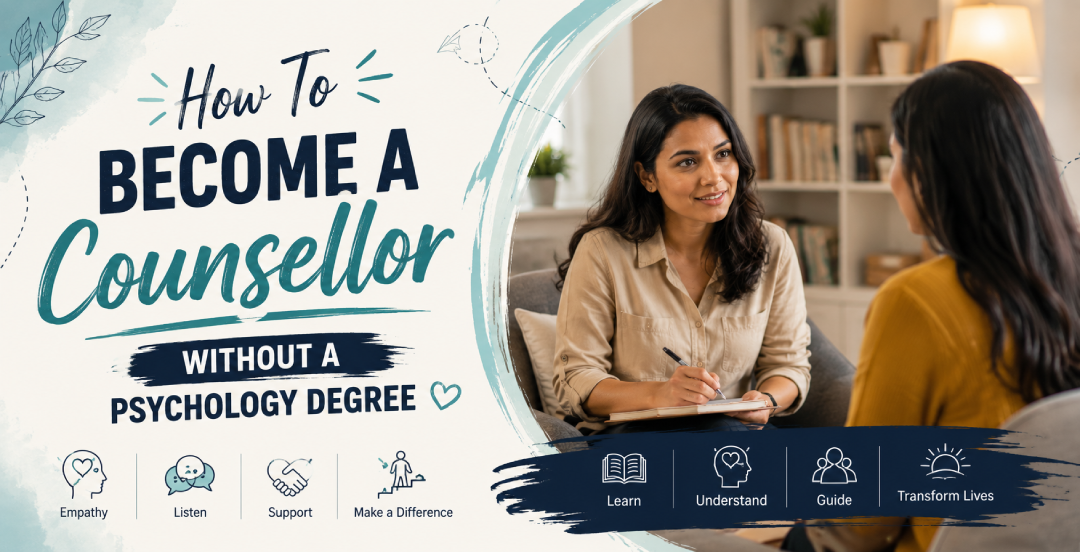
The awareness of mental health has increased exponentially in the last few years and counselling has emerged as one of the fastest growing career options in India. Schools, colleges, hospitals, NGOs, rehabilitation centres and corporate organizations are on the lookout for qualified counsellors to help people cope with emotional, educational and personal issues.
If you’re wondering how to become a counsellor, there is no single traditional path to follow. With the right education, hands-on training, communication skills and professional certification, you can build a successful and meaningful career in the field of counseling.
In this complete guide, we’ll discuss all areas of employment from eligibility and qualifications to salary and career opportunities.
What is a Counsellor?
A counsellor is a trained professional who helps individuals recognize, understand and resolve problems of an emotional, behavioral, educational, career or relationship nature. Counsellors do not make decisions for their clients but help clients explore alternatives and develop strategies to improve their well-being.
Typical responsibilities include:
- One-on-one counseling sessions
- Listening and emotional support
- Recognizing behavior patterns
- Providing career and academic planning
- Offering advice on managing stress and anxiety
- Family and couples support
- Confidentiality and professional ethics
As mental health awareness increases, counsellors are becoming an important part of educational institutions, health care systems, and the workplace.
Why Become a Counsellor?
Counseling is more than a profession; it is also an opportunity to make a positive difference in people’s lives while enjoying a rewarding and growing career.
- Benefits of being a counsellor
- Demand in various fields
- Chance to serve people and communities
- Flexible career choices
- Potential of private practice
- Online counseling opportunities
- Continuous learning and professional development
- High earning potential
There is a tremendous career scope for trained counselors as mental health support is gaining wider acceptance in India.
How to Become a Counsellor: A Step-by-Step Guide
Step 1: Research Different Counseling Specialties
Before you start your counseling journey, determine which area of counseling interests you the most.
Some of the popular specializations are: Counseling Counseling for Kids School Counseling CAREER COUNSELLING Marriage and Relationship Counselling Family Therapy Addiction Therapy Rehab Counseling Business Advisory Counseling for Mental Health Choosing a specialization will help you select the right course and career path.
Step 2: Meet the Education Requirements
Many aspiring counsellors believe that only those with a degree in Psychology can become counsellors. While having a degree in Psychology is helpful, those who have degrees in Education, Social Work, Sociology, Human Resources, Nursing or Business can also enter the field through counseling programs that are specifically designed for them.
Educational pathways are:
Bachelor’s Degree Diploma in Counseling, Advanced Diploma, Post Graduate Diploma, Master’s Degree in Counseling or Psychology, Professional Certification Courses
The most important thing is to be trained in the principles of counseling and in practical application in a structured way.
Step 3: Take a Professional Counseling Course
A good counseling course should cover both theoretical knowledge and practical skills.
Topics usually include:
* The behavior of man
* Counseling theories
* Ethics and confidentiality
* Ways of communication
* Development of children and adolescents
* Case studies
* Practical counseling techniques
* Fundamentals of Psychological Assessment
Professional training provides the basis of a successful career in counseling.
Step 4: Gain Practical Experience One of the most valuable aspects of counselor training is gaining practical experience.
During internships and supervised practice, you will learn how to:
Hold counseling sessions
Build rapport with clients
Handle sensitive situations
Maintain ethical standards
Apply counseling techniques effectively
Practical experience increases confidence and prepares you for real-world situations.
Step 5: Obtain Professional Certification
Your training is only the first step. Earning a credential from a recognized organization will boost your professional reputation and demonstrate your dedication to ethical practice and ongoing learning.
Certification is helpful for career prospects in educational institutions, health care, NGOs and corporate organizations.
6. Keep Learning and Growing Professionally
The field of counseling is constantly changing with new research and therapeutic techniques. Good counsellors stay up-to-date on:
- Workshops
- Advanced certifications
- Professional development programs
- Professional conferences
- Research & Reading
- Supervision & Mentorship
Continued training allows counsellors to better serve their clients.
Can You Be a Counsellor Without a Psychology Degree?
Yep.
One of the biggest myths about counselling is that only Psychology graduates can become counsellors. In fact, many professionals move into counseling from fields such as Education, Social Work, Human Resources, Sociology, Nursing, and Business.
Most importantly:
- Counseling Education, Professional
- Practical training
- Ethics in action
- Communication Abilities
Mercy - Listening actively
- Dedication to assisting others
We care more about your willingness to learn and grow as a counsellor than your undergraduate major.
School Counsellor Types of Counsellors
School counsellors help students with their academic, emotional, behavioral and career choices, while promoting overall well-being.
Child Counsellor
They work closely with families and schools to help children manage developmental, emotional, behavioral, and learning challenges.
Career Advisor
Career counsellors help students and professionals choose educational pathways, career options, and skill development opportunities.
Marriage Counsellor
Relationship counsellors assist couples and families in enhancing communication, resolving conflicts, and strengthening relationships.
Substance Abuse Counsellor They offer counseling and rehabilitation assistance to individuals recovering from substance use and behavioral addictions.
Corporate Counsellor Corporate counsellors work for companies and help to improve the quality of life for employees by dealing with work-related stress, burnout, interpersonal conflict and mental wellness.
Skills You Need to Be a Successful Counsellor You need more than technical education. Good counsellors have strong interpersonal and emotional skills.
Empathy, Active Listening and Communication Skills
Emotional Intelligences
Patience, Ethical Judgement
Critical Thinking Abilities
Puzzles, Compassion, Professional boundaries
Resilience, Self-Key skills include:
Awareness
Counsellors use these skills to build trust and provide meaningful guidance.
Top Counseling Courses in India
Students can choose different educational pathways depending on what they want to achieve:
Certificate Courses in Counseling Diploma Courses Advanced Diploma Courses Postgraduate Diploma Courses
Master’s Degree Programs Online Certification Courses for Counseling
When choosing a course, think about:
- Curriculum
- Possibilities of practical training
- Faculty Expertise Industry Impact
- Internship Assistance Certification Credibility Career Scope of Counsellors in India
Counsellors can work in many different sectors, including:
- Schools, Colleges, Universities, Hospitals, Mental Health Clinics, NGOs, Rehabilitative Centers
- Child Guidance Centers Corporate Organizations Wellness Platforms
- Online Counseling Services Private Practice
With the increasing awareness of emotional well-being, the demand for qualified counsellors is likely to keep rising.
Counsellor Salary in India
The salary of the counsellor depends on the qualification, specialization, experience and employer.
Experience Approximate Annual Salary
Fresher ₹2.5-4 LPA
1-3 Years ₹ 4-6 LPA
3-5 Years ₹6-9 LPA
Sr. Professionals ₹10+ Lakh PA
Private Practice* Depends on client base
Consulting and private practice are two other avenues for earning substantially more if you develop specialized skills and build a strong reputation.
In Conclusion
If you are wondering how to become a counsellor, it begins with proper education, practical experience, and a genuine desire to help others. Psychology is not the only path to the profession, but having a background in the subject can be beneficial. By developing strong counseling skills, undergoing professional training, and continuously updating your knowledge, you can build a successful and rewarding career in counseling.
The need for mental health and counseling services is growing all over India, and there has never been a better time to start a career as a professional counsellor.
FAQs (Frequently Asked Questions)
How do I qualify to become a counsellor?
You can take up a professional course in counseling, gain practical experience through internships, and keep on developing your counseling skills.
Can you be a counsellor without a Psychology degree?
Yes. With the proper counseling training and hands-on experience, individuals from all sorts of educational backgrounds can become counsellors.
What is the best way for a counsellor to take?
Depending on your career goals, it may be best to pursue certificate programs, diploma programs, postgraduate diploma programs, or master’s degree programs in counseling.
Is counseling a good career in India?
Yes. The increased awareness of mental health and wellness has helped contribute to the increased demand for qualified counselors in education, health care, corporate and community settings.
What are the basic skills of counsellor?
The most important skills are empathy, active listening, communication, ethical judgment, emotional intelligence, patience, and problem solving.