Ever wonder why people act differently in the same situation?
What makes some people remain calm in their crisis, and others panic?
Why do our thoughts and feelings sometimes overpower our reason and sense?
Or
Why do experiences in childhood follow people for years after?
All these answers are within the human psyche.
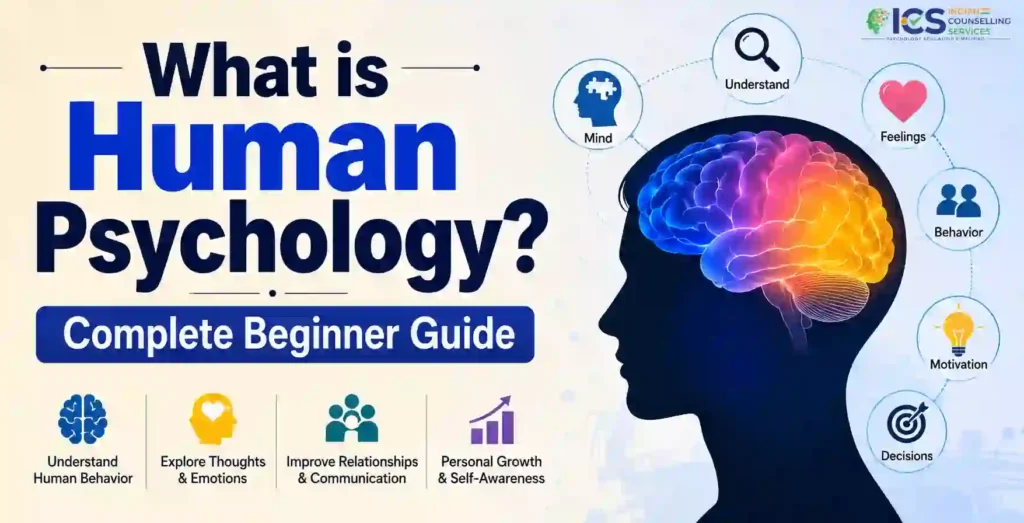
Human psychology is all about understanding the human mind, human emotions, human behavior, and human interaction with the surrounding world. It aids in the understanding of others and of ourselves.
Whether in the form of relationships and communication, stress, motivation, habits, or mental health, psychology influences just about everything we do.
Psychology is not a solely therapist- or researcher-based field today. From students to teachers, parents to managers, healthcare workers to content makers, there are many who are interested in psychology to understand human behavior and build good personal and professional relationships.
Those who want to understand the workings of the mind can start with a human psychology course to gain some basic knowledge in a simple and practical way.
What is Human Psychology?
In a nutshell, human psyche research is about the way people think, feel, behave, and react.
It addresses such questions as:
- What are the reasons for certain decisions made?
- What influences emotions?
- How do habits form?
- Why is there a difference in people’s actions in social settings?
- What is the impact of stress upon the mind and the body?
- What shapes personality?
Psychology not just covers the conscious mind, but also the unconscious mind. It uses scientific, observational, research, and behavioural explanations to describe human behaviour and functioning.
There’s something fascinating about the fact that there’s a psychology other than mental illness. It is about knowing about everyday human experiences, emotions, relationships, communicating, learning, confidence, fears, motivation, and personal growth.
Why is Human Psychology Important?
We all experience psychology in our lives on some level every day.
For example:
- The way we communicate with others.
- How we react during arguments.
- Why do we feel anxious before exams or interviews?
- How social media impacts emotions.
- Why do certain memories stay with us for years?
- Why are some habits hard to break?
Knowing psychology puts people in a better position to be aware of their emotional state and to balance their mental state.
Some of the important advantages of studying psychology for learning:
- Better Self-Awareness: Psychology allows people to gain insight into themselves and their triggers, strengths, and behaviors.
- Improved Communication: The better you understand people’s thoughts and feelings, the better the communication will be and the more empathetic it will be.
- Stronger Relationships: Psychology enhances emotional awareness, communication, and interpersonal skills.
- Better Stress Management: Understanding psychological coping strategies can help individuals manage anxiety, stress, and emotional load.
- Professional Growth: Psychology can be applied to a number of areas in the workplace, such as leadership, team management, HR, counselling, marketing, and customer understanding.
Main Branches of Human Psychology
Psychology is a broad and intriguing subject that covers various aspects of the human mind, emotions, behaviour, personality, relationships, and psychological well-being. In the course of the years, psychology has developed into several branches that concentrate on a particular sector of human conduct and understanding.
It is essential that a novice to psychology knows about these branches, as it will help them build a better idea about the aspect of psychology that interests them the most, which can be counseling, therapy, child development, mental health treatment, emotional healing, behavioral analysis, or personal growth.
The many professional programs and certifications available today are also geared towards these specializations. Students may therefore desire to learn specific areas of mental health and human behavior and may opt for focused learning programmes like counseling psychology, psychotherapy, CBT, NLP, hypnotherapy, child psychology, or clinical psychology.
Below are some of the most crucial branches of human psychology that everyone should know about.
Cognitive Psychology
Cognitive psychology is concerned with the way the human brain works. It examines the cognitive processes that occur within the individual but affect their thoughts, learning, memory, understanding, and decision-making.
This branch delves into the following areas:
- memory.
- concentration.
- attention span.
- language processing.
- learning patterns.
- reasoning.
- problem-solving.
- decision-making.
Basically, cognitive psychology is the study of the ways in which the brain processes information from its surroundings and turns that information into thoughts, actions, feelings, and responses.
For example:
- Why do some people learn faster than others?
- Why are certain memories stronger than others?
- Why do people overthink situations?
- How does the brain solve problems under pressure?
Cognitive psychology plays an important role in:
- education.
- learning development.
- therapy.
- behavior correction.
- mental performance improvement.
It is also very relevant to contemporary evidence-based treatments, such as cognitive-behavioral therapy (CBT), which targets the identification and modification of negative thinking patterns that impact emotions and behavior. Practical therapeutic approaches involve special training in CBT to gain insight into the role of thoughts on emotional well-being and patterns of behaviour.
Behavioral Psychology
Behavioral psychology or behaviorism is the study of observable behaviour and actions in humans. Behavioral psychology deals with the learning of behavior in relation to the environment, as opposed to those branches that have a primary interest in internal thoughts.
This field is based on the premise that behaviors are learned through:
- experiences
- conditioning
- rewards
- punishments
- habits
- environmental influences
Behavioral psychologists research the influence of habits on repeated behavior and how behaviors can change over time.
For example:
- Why do certain fears develop?
- How are habits formed?
- Why do children repeat rewarded behaviors?
- How can unhealthy behaviors be changed?
Behavioral psychology is widely applied in:
- child development
- classroom learning
- parenting strategies
- addiction management
- behavior therapy
- habit formation
This branch is particularly important with regard to the emotional and behavioral development of children. Students who want to learn more about child behavior, developmental issues, and emotions may choose to take specializations in child psychology, in which they are able to study children’s cognitive, emotional, and social development in a practical environment.
The principles of behavior are also applied in counselling and psychotherapy to allow the individual to slowly change their unhealthy emotional and behavioral patterns.
Clinical Psychology
Clinical psychology is one of the most widely known fields of psychology. It is concerned with understanding, diagnosis, and treatment of emotional, behavioral, and mental health problems.
Clinical Psychologists are professionals who assist people who are facing difficulties with:
- anxiety,
- depression,
- trauma,
- stress disorders,
- emotional difficulties,
- phobias,
- behavioral disorders,
- relationship issues.
This branch merges psychological theory, evaluation, counseling, and therapeutic approaches to enhance mental health.
Clinical psychology involves:
- psychological assessment,
- case analysis,
- therapy planning,
- emotional support,
- behavioral intervention,
- mental health rehabilitation.
Therapists in this area may employ a variety of therapeutic approaches, including:
- Cognitive Behavioral Therapy (CBT),
- psychotherapy,
- counseling techniques,
- behavioral therapy,
- emotional regulation strategies,
The importance of clinical psychology is increasing in hospitals, rehabilitation centers, schools, NGOs, and private practice due to increased awareness of the importance of mental health.
Those with an interest in gaining more comprehensive knowledge and understanding of mental health disorders, therapeutic approaches, and psychological interventions may choose to study clinical psychology, psychotherapy, or counselling psychology training to acquire more practical therapeutic skills and professional knowledge.
Social Psychology
People are social animals by nature, and our surroundings play a more important role in us than we believe. Social psychology focuses on the impact of social environments and interactions with others on people’s thoughts, emotions, attitudes, and behaviors.
This branch explores the actions of individuals:
- in groups,
- in relationships,
- under social pressure,
- within cultural environments,
- in professional and social settings.
Social psychology is the study of:
- peer pressure,
- social influence,
- communication patterns,
- attraction and relationships,
- stereotypes and prejudice,
- leadership,
- group dynamics,
- public behavior.
For example:
- Why is it that people do different things when they are in crowds?
- How do social opinions influence?
- What is the impact of social media on self-esteem and feelings?
- What is the reason for people needing to be validated by others?
This branch may serve to account for some common social actions and feelings.
Social psychology is applied in many of the following areas:
- counseling,
- workplace management,
- leadership training,
- marketing,
- relationship counseling,
- communication development,
The fields of counselling psychology, NLP (Neuro-Linguistic Programming), and interpersonal communication are heavily reliant on social psychology concepts as they are concerned with enhancing communication, emotional awareness, confidence, and relationship-building skills.
Developmental Psychology
Developmental psychology studies how people grow and change throughout different stages of life, from infancy to old age.
This branch focuses on human growth and development through:
- emotional growth,
- cognitive development,
- personality formation,
- social skills,
- behavioral changes,
- psychological maturity.
Developmental psychologists investigate the effects of children’s early life experiences, family environments, education, social interactions, and life events on overall mental and personality development.
This discipline addresses a number of relevant questions, such as:
- In what ways are childhood and adult personality related?
- How do emotions change with age?
- How are the behaviours of teens different from those of adults?
- What are the impacts of ageing on Mental and Emotional Wellbeing?
In developmental psychology, they are particularly important:
- child psychology,
- adolescent counseling,
- parenting support,
- educational psychology,
- emotional development programs.
It is a highly relevant branch for students who are interested in working with children, young people, their families, and educational environments. In many cases, child psychology and school counseling programs are designed to incorporate principles of developmental psychology to enable practitioners to be more familiar with emotional and behavioral development at various ages.
Counseling Psychology
Counselling psychology involves working with people who are experiencing emotional, personal, social, educational, and/or career problems. Counselling psychology is not primarily concerned with the severe psychological disorders that are addressed in clinical psychology; it generally assists people who are facing difficulties in their lives, or stress, emotional confusion, relationship issues, or personal growth issues.
Counselling Psychologists can assist the person:
- manage stress and anxiety.
- improve emotional well-being.
- build confidence.
- strengthen relationships.
- cope with life transitions.
- improve decision-making.
This branch emphasizes:
- empathy,
- active listening,
- communication,
- emotional support,
- problem-solving,
Counselling psychology is applied in this way in a number of areas, including:
- schools,
- colleges,
- corporate environments,
- wellness centers,
- rehabilitation programs,
- private counseling practice.
With the rise of emphasis on emotional well-being in the contemporary world, the field of counselling psychology has grown into one of the topmost in the mental health and personal development domain.
Psychotherapy and Integrative Therapies
Psychotherapy is a therapeutic branch of psychology that employs therapy sessions and techniques to aid people in comprehending and dealing with emotional issues.
Psychotherapy helps individuals:
- process emotions,
- heal trauma,
- improve self-awareness,
- change negative thought patterns,
- develop healthier coping mechanisms.
Many professionals today are interested in alternative practice methods, such as:
- CBT,
- talk therapy,
- behavioral therapy,
- mindfulness techniques,
- hypnotherapy,
- NLP techniques,
- expressive therapies.
Today, many professionals also explore complementary approaches like:
- Art Therapy,
- Movement Therapy,
- Hypnotherapy,
- Neuro-Linguistic Programming (NLP).
They are being employed more and more as a way to help heal the wounds of the heart, develop the self, boost confidence, manage stress, and enhance communication skills in therapeutic and coaching environments.
How Psychology Influences Everyday Life
Some of the most interesting phenomena of psychology are that it seems to be present in the ordinary day-to-day scene.
For example:
- Lacking in diligence, even if it is important work.
- Worrying or anxiety before speaking in public.
- Becoming emotionally involved with memory.
- Overthinking conversations.
- When you are appreciated, you tend to feel good, which will motivate you to do more.
- Becoming stressed due to the workload.
These behaviours can be scientifically explained using the knowledge from the field of psychology.
After people start to grasp these patterns, they are more likely to be better able to regulate their emotions, communicate, and deal with their own issues.
Basic Psychological Concepts Every Beginner Should Know
It is important to have some knowledge about the basics of human psychology to find out more about the human mind and how it thinks, feels, behaves, and reacts in everyday life. The concepts are the building blocks of human conduct and offer insight into how experiences and events influence human responses.
Let’s discuss some of the most crucial psychological theories for novice trainers.
Emotions
Emotions are natural psychological and physiological reactions to situations and experiences, thoughts, or interactions. We all feel happy, sad, fearful, angry, excited, anxious, or frustrated at our own individual times in our lives.
Psychology explores the effect of emotions on:
- behavior,
- decision-making,
- relationships,
- communication.
- stress responses.
Anxiety leading up to an interview, for instance, can impact confidence, thinking processes, and physical reactions such as sweating or an increased heartbeat.
Emotions are not good or bad; one important thing that psychology teaches. Even difficult feelings, such as fear or anger, have their purpose. It’s important to understand and respond to emotions in a healthy manner.
Personality
Personality refers to the unique combination of thoughts, behaviors, attitudes, and emotional patterns that make each person different.
It influences:
- how people communicate.
- how they react to stress.
- how they build relationships.
- how they handle challenges.
Some personalities are extroverted, outgoing, and expressive, whereas others are introverted and remain calm and reserved. These personality differences are shaped by a combination of life experiences, circumstances, parenting, and biology.
Self-awareness can be enhanced with the understanding of personality and how they react in certain situations, and with what strengths.
Motivation
Motivation is the energising psychological force that encourages people to act, to strive, and to persist in activities.
Psychology research is undertaken to gain insight into motivation:
- Why do people feel inspired?
- Why does procrastination happen?
- What influences discipline and consistency?
- Why do some people lose interest quickly?
Motivation can be internal with regard to personal growth or external (i.e., money, grades, recognition).
Psychologists also know that stress, emotional fatigue, fear of failure, and lack of confidence can also have a big negative impact on motivation. That’s why motivation and mental well-being go hand-in-hand.
Perception
Perception is the interpretation and understanding of the world around one. What is interesting is that people don’t necessarily respond to reality, but to their perception of reality.
That’s why you can have the same situation in two different ways.
For example:
- Public speaking can be thrilling to one, but terrifying to another.
- It could be stressful and scare someone else.
The factors that influence perception are:
- past experiences,
- beliefs,
- emotions,
- culture,
- expectations.
Psychology researches the subject of perception because of the significant role it plays in the field of communication, relationships, emotional responses, and decision-making.
Learning
In psychology, the word learning is used to describe the process by which an individual acquires new knowledge, learns new habits, gains new skills, and changes behavior as a result of his or her experiences and observations.
Learning happens through:
- education,
- social interactions,
- personal experiences,
- observation,
- rewards and consequences.
For instance, children can imitate behaviors that they see their parents or the environment do.
Learning is studied in psychology to gain insights into the formation of habits, the change in behaviors over time, and how individuals can learn healthier emotional and behavioral patterns. It is a knowledge that has widespread application in education, counselling, and therapy, as well as in personal development.
Psychology vs Psychiatry: What’s the Difference?
Many people believe the two professions are the same, and they aren’t.
Psychology | Psychiatry |
Focuses on behavior and mental processes. | Focuses on the medical treatment of mental disorders. |
Uses therapy and counseling approaches. | Can prescribe medications. |
Usually, non-medical professionals. | Medical doctors. |
Both fields often work together to support mental health treatment. | |
Career Opportunities in Psychology
Global awareness of mental health is rising, and so is psychology, a sector that is growing at an unprecedented pace.
Here are some popular career choices:
- Counselor,
- Clinical Psychologist,
- Child Psychologist,
- Mental Health Therapist,
- School Counselor,
- Behavioral Therapist,
- Career Counselor,
- Psychology Researcher,
- HR Professional,
- Life Coach.
The field has the potential for opportunities in:
- hospitals,
- schools,
- NGOs,
- corporate organizations,
- rehabilitation centers,
- private practice,
- wellness industries.
Skills You Develop by Studying Psychology
Psychology is not only useful in the professional world, but it is also beneficial in personal life skills.
Some important skills include:
- empathy,
- active listening,
- emotional intelligence,
- communication,
- problem-solving,
- critical thinking,
- conflict resolution,
- behavioral understanding.
These skills are applicable in nearly all professions and relationships.
How Can Beginners Start Learning Psychology?
For many psychology beginners, the start of their studies in psychology can be frightening, but there is a way to start if you would like.
Learning can take place via:
- books,
- online certifications,
- workshops,
- diploma programs,
- practical observation,
- case studies.
Having a well-designed human psychology course can help make the concepts easier to learn and give practical insights into human thoughts, emotions, and behavior.
Common Myths About Psychology
“Psychology is only for people with mental illness.”
This is one of the biggest misconceptions.
It is actually an understanding of human behaviour and emotions in general in the context of human relationships, learning, and mental health.
“Psychologists can read minds.”
Psychologists can study behaviour, but they are not magic; they are not able to read the thoughts of other people.
“Psychology is not scientific.”
Experiments, observations, neuroscience, and evidence-based practices are key to modern psychology.
The Future of Human Psychology
Human psychology is playing a more and more significant role in the fast-paced and highly emotional world today. Stress, burnout, and anxiety are rising, as are pressures at work, in relationships, and from digital overload. Mental and emotional well-being is a growing priority.
Psychology is no longer restricted to therapy rooms or hospitals but is making its way into the limelight as people openly talk about mental health. It is now contributing to:
- education,
- healthcare,
- workplace wellness,
- counseling and coaching,
- leadership development,
- relationship support,
- digital mental health platforms.
Even organizations are waking up to the fact that mental health, communication, and emotional intelligence have a direct impact on productivity and general happiness.
Mental health support is increasingly available online, however, in a way that is more accessible than ever before, with online therapy platforms, mental health apps, and virtual counseling services becoming available.
With this ever-increasing demand, psychology has become an incredibly valuable field for an individual, and also a very lucrative career option.
With the increased awareness of emotions, there is a growing demand for professionals who have trained in counselling, psychotherapy, child psychology, and mental health support, and will continue to be much in demand in the future.
Conclusion
The human mind is very complex, and that’s what makes psychology very fascinating. All thoughts, feelings, responses, habits, and relationships are on a psychological level. The more people know about psychology, the more they come to understand themselves and others.
From the perspective of psychology, there are many things we can learn to improve communication, manage emotions better, build healthier relationships, support others emotionally, and much more, all of which can have a positive impact on daily life.
What is best about it, you don’t have to be a psychologist to start learning it. A simple knowledge of these human behaviors can alter thoughts, reactions, and interactions with others.
If you’re looking to delve deeper into the human mind, feelings, and conduct, a professional human psychology courses could be the ideal starting point, and perfect for beginners who wish to explore this field in a more structured and practical manner.
FAQs (Frequently Asked Questions)
What is human psychology in simple terms?
Human psychology is the study of the human mind concerning their thoughts, feelings, acts, and reactions in various situations.
Why should beginners learn psychology?
Psychology aids in enhancing understanding of self, communication, emotional intelligence, and human behavior.
Is psychology useful in everyday life?
Yes, psychology does contribute to relationships, managing stress, communication, and decision-making, and understanding emotions.
What careers are available in psychology?
Possible careers include coaching, behavioral therapy, HR, counselling, therapy, and child psychology.
Can I learn psychology online?
Indeed, many young people begin their Psychology studies online, taking part in a structured course of study that is structured.