Introduction
This is a time of digital revolution in which nearly all communication, education, shopping, entertainment, and even healthcare services are available via digital channels. Currently, the average individual spends more than 2.5 hours on social media each day, and there are over 5.5 billion internet users worldwide.
Digital technology has brought a great deal of convenience and connectivity to life, but it has also created new psychological issues—Digital Stress.
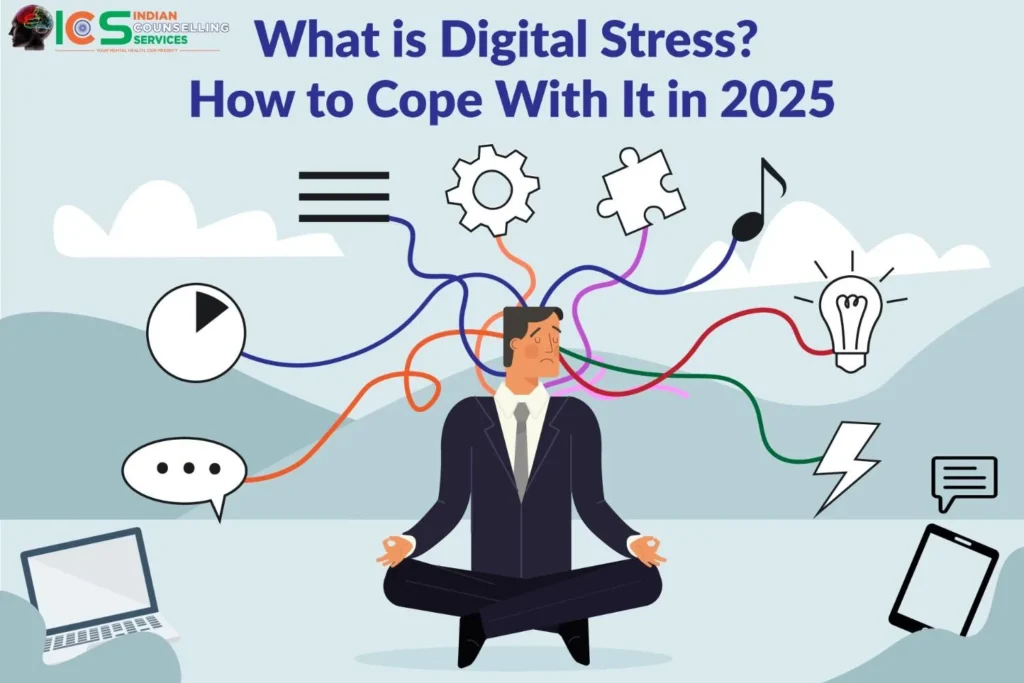
Digital stress is one of the most significant mental health issues of our time, affecting students, professionals, and even children. Emotions, attention, and relationships are being reshaped by constant notifications, social media pressure, and information overload.
This article explores the meaning, causes, symptoms, psychological impact, and practical solutions to overcome digital stress effectively.
Digital Stress – What is it?
Digital stress, or technostress, is the psychological strain and mental fatigue that occurs when digital technology is used excessively or in an unhealthy way.
It happens when a person’s mind and emotional system are overloaded with device, app, and website interactions.
Technology can lead to:
- Mental exhaustion
- Emotional burnout
- Reduced attention span
- Sleep disturbances
- Increased reliance on computers, phones, or other electronic devices
Digital stress can simply be defined as the difficulty of achieving mental balance in a world that is always connected.
💡 Psychological Insight
Psychological studies have demonstrated that excessive use of digital media can negatively affect mental well-being. High screen time and social media use have been associated with:
- Increased anxiety
- Depressive symptoms
- Loneliness
- Reduced concentration
Digital environments, with their constant demand for attention, stimulate the human brain in ways similar to real-world pressure, resulting in stress responses.
The “Hidden” Reality of Digital Life
According to Laurie Barnett Levine, CEO of Mental Health America of Southwestern PA:
“Social media has been more of a means to keep us connected in some ways and disconnected in other ways.”
This highlights a major contradiction in digital life. Technology brings people closer together virtually but can reduce emotional connection.
While likes, shares, and endless scrolling seem harmless, they often contribute to digital anxiety and burnout. This is not a short-term stress response but a sustained mental state of overstimulation and emotional fatigue.
⚠️ What Causes Digital Stress?
There is no single cause of digital stress. It is a combination of psychological, social, and technological pressures.
1. 📩 Information Overload
There is a constant flow of:
- Emails
- Notifications
- News updates
- Social media posts
This exceeds the brain’s ability to process information, resulting in fatigue and confusion.
2. 📱 Social Media Pressure
Social media promotes comparison and validation-seeking behavior. Common triggers include:
- FOMO (Fear of Missing Out)
- Cyberbullying
- Unrealistic lifestyle comparisons
- The need to present a “perfect” online image
All of these strongly affect confidence and emotional balance.
3. 🔐 Privacy and Security Concerns
Concerns about:
- Data breaches
- Online scams
- Identity theft
- Privacy violations
create constant unease and mistrust in online platforms.
4. 💻 Technological Complexity
Frequent updates to apps, tools, and devices can be stressful, especially for those who are not tech-savvy. Constant change leads to frustration and overload.
5. 🔄 Continuous Connectivity Pressure
The “always on” mindset can be stressful and reduces mental downtime and personal rest.
🧾 Symptoms of Digital Stress
🧠 Cognitive Symptoms
- Difficulty concentrating
- Reduced memory performance
- Mental fog
😔 Emotional Symptoms
- Anxiety and irritability
- Feeling overwhelmed
- Emotional isolation
💤 Physical Symptoms
- Sleep disturbances
- Constant fatigue
- Headaches
📱 Behavioral Symptoms
- Excessive phone use
- Social withdrawal
- Reduced productivity
- Compulsive scrolling (doomscrolling)
🧠 Psychological Effects of Digital Overuse
Excessive digital use has been shown to have long-term effects on mental well-being.
📉 Key Impacts:
- Higher risk of anxiety and depression
- Reduced attention span
- Reduced emotional regulation ability
- Decreased face-to-face social interaction
- Increased feelings of loneliness despite greater internet use
The biggest psychological concern is FOMO (Fear of Missing Out), which leads to compulsive behavior patterns and constant checking of updates.
Over time, this cycle results in dependency and emotional exhaustion.
🌿 Digital Wellness: The Modern Solution
Digital wellness refers to the intentional and mindful use of technology to promote mental, emotional, and physical well-being.
One of the core concepts of digital wellness is digital detox, which involves intentionally reducing screen usage to improve mental health.
The global digital wellness industry is expanding rapidly, with its estimated value projected to exceed $1 trillion by 2028.
🧘 How to Manage Digital Stress
1. 🕒 Set Clear Digital Boundaries
- Set specific check-in times for social media and emails
- Avoid checking devices first thing in the morning
- Designate “no-screen” areas (bedroom, dining space)
2. 📱 Practice Mindful Technology Use
- Use technology intentionally
- Follow educational or meaningful content
- Reduce unnecessary app usage
- Monitor screen time patterns
3. ⏸ Take Regular Breaks
- Take breaks throughout the day
- Practice mindfulness activities
- Include digital-free days
- Take phone-free walks
4. 😴 Prioritize Sleep Hygiene
- Avoid screens 1 hour before sleep
- Maintain a consistent sleep schedule
- Reduce nighttime notifications
5. 🤝 Strengthen Real-Life Connections
- Spend time with family and friends
- Participate in outdoor activities
- Engage in hobbies outside digital spaces
6. 🧑⚕️ Seek Professional Support
- Consult a psychologist if needed
- Attend counseling or therapy sessions
- Follow mental health programs
7. 💆 Practice Self-Care Activities
- Exercise regularly
- Practice yoga or meditation
- Spend time outdoors
- Engage in creative activities
⚖️ Long-Term Effects of Ignoring Digital Stress
If not managed properly, digital stress can lead to:
- Chronic mental fatigue
- Sedentary lifestyle
- Weight gain and health problems
- Emotional disconnection
- Decreased productivity and motivation
Maintaining a balance between digital and non-digital life is no longer optional—it is essential for long-term mental health.
🌍 Conclusion
Digital stress is a unique psychological challenge of the digital age. While technology has been a major benefit to society, it has also introduced several hidden mental health concerns.
However, by practicing digital wellness and adopting healthier digital habits, individuals can regain balance and improve their overall well-being.