

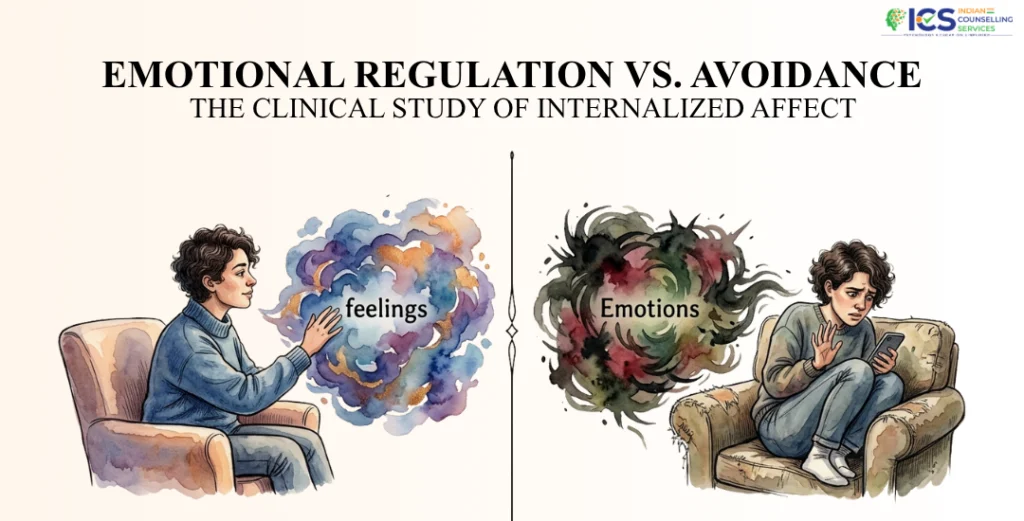
One of the differentiations in the modern mental health discourse has gained more and more significance- the difference between emotional regulation and emotional avoidance. Although one can observe that both are similar on the surface, their long-term consequences are quite different.
As the stress, burnout, emotional overload, etc. keep increasing in 2026, most people consider themselves to be dealing with their emotions well. As the matter stands, they might be repressing or evading them, and this may cause inner torment in the long-term.
One of the major concerns of study in psychology is the way emotions are processed- or internalized. It is also a major theme in therapy courses, such as a CBT course online, where one is taught evidence-based strategies to address his or her thoughts, emotions, and behavior patterns.
What Is Intellectual Disability?
The emotional regulation can be described as the skill of identifying, processing, and addressing emotions in a normal and adaptive manner.
It is not repression and eradication of emotions. Rather, it is a reaction to emotions that is supportive and leads to well-being as well as good decision-making.
For example:
- An individual can be nervous prior to a presentation, but adopts breathing methods to keep them down to earth.
- A person can be angry in a dispute but decide to express themselves in a composed manner rather than have a rough reaction.
These reactions are conscious, tolerant, and willful, which are fundamental to emotional regulation.
What Is Emotional Avoidance?
Instead, emotional avoidance is attempting to try to avoid, crush, or disregard unpleasant feelings.
This can be a temporary solution, but in many cases it causes psychological problems in the long-term.
- To feel sad, a person might keep on distracting his or her mind so that they will not feel bad.
- One may evade tough talks to avoid anxiety or confrontation.
- One can contain anger, but at some point it will accumulate and burst out.
Avoidance gives one an illusion that he or she is in control, yet the truth is that one cannot process his/her emotions.
Understanding Internalized Affect
Internalized affect is the experience, storage, and processing of emotions within oneself over a period of time.
Emotions do not vanish when they are neither brought out nor handled properly. Rather, they are internalized and reduce thoughts, behaviors, and even physical health.
This can lead to:
- Chronic stress or anxiety.
- Emotional numbness.
- Sudden emotional outbursts.
- Difficulty forming or maintaining relationships.
Knowledge of internalized affect can be useful in understanding why avoidance is likely to cause greater psychological distress.
Key Differences: Regulation vs. Avoidance
Even though the external manifestations of emotional regulation and avoidance resemble one another, internal processes are extremely different.
- Emotional regulation is a process of consciously recognizing and reacting to emotions, and avoiding emotional regulation is a process of consciously disregarding and suppressing emotions.
- Regulation results in emotional stability in the long term, whereas avoidance tends to enhance long-term distress.
- Regulation creates resilience and self-awareness, and avoidance decreases emotional toleration with time.
The awareness of this difference is the initial step to the healthy functioning of emotions.
Why Do People Avoid Emotions?
Emotional avoidance is not a weakness sign; it is usually an acquired coping technique.
Fear of Overwhelm: A lot of people do not want to feel emotional as a result of being overwhelmed or losing control. This is mostly prevalent in individuals who were not taught how to safely deal with emotions.
Cultural and Social Conditioning: In most societies, including some sections of India, the expression of emotions is discouraged. Staying strong or moving on may be taught to people, and it results in suppression.
Past Emotional Experiences: When the expression of emotions in the past resulted in being criticised, rejected, or even clashed, then people might also learn not to express emotions at all.
The Psychological Cost of Avoidance
Although avoidance can be perceived to be protective, it can lead to greater psychological problems in the long run.
- Raw emotions may build up and gain momentum, culminating in anxiety or depression.
- Avoidance may quash personal development because it restricts one from facing challenges.
- Lack of openness or communication on emotional matters may hurt relationships.
With time, people might no longer be connected with themselves and others.
Clinical Approaches to Emotional Regulation
Structured evidence-based practices help mental health professionals assist individuals to transcend avoidance and transition to regulation.
Such strategies can usually be studied during a course of CBT online, and learners learn practical skills that will help them cope with their emotions.
Emotional Awareness: The initial one is that emotions should be named and labeled correctly.
People are taught about the description of particular feelings like anxiety, frustration, and sadness instead of saying, I feel bad. This transparency lowers the level of confusion and maximizes control.
Cognitive Restructuring: Cognitive Behavioral Therapy (CBT) is concerned with the process of detecting and refuting unhelpful thought patterns.
The ability to shift the interpretations of situations allows people to become less emotional and react more efficiently.
Exposure to Emotions: Therapy teaches the gradual exposure to emotions in a secure setting as opposed to the avoidance of discomfort.
This enables people to develop tolerance and understand that emotions can be controlled.
Mindfulness and Grounding: Mindfulness exercises also enable a person to remain unmistakable of emotions without being judgmental.
Emotional overwhelm can be minimized by grounding techniques, including the focus on breathing or body sensations.
Behavioral Activation: Avoidance cycles may be broken by participating in meaningful activities.
Making small strategic moves even when it is uncomfortable can help to lift mood and create confidence.
Signs You Might Be Avoiding Emotions
Change requires the realization of avoidance patterns.
- You keep on distracting yourself to never think or feel seriously.
- You do not talk or face difficult things.
- You are also unmoved or dissociated.
- You then get bursts of emotion after weeks of repression.
These inclinations reflect the fact that emotions are not necessarily processed.
Moving Toward Healthier Emotional Processing
The shift towards regulation is gradual. Patience, self-compassion, and practice are required.
- The first step is to accept feelings without being judgmental.
- You must learn to live with being out of your comfort zone in little manageable bits.
- Engage in expression of emotion in writing, speaking, or creative sources.
- Use the help of professionals where needed.
These measures can be used to develop emotional stability and hardiness over time.
Why Emotional Regulation Matters in 2026
Emotional needs in a digital, extremely fast-moving world are more than ever.
The mind is subjected to constant information, performance pressure, and social comparison. The lack of effective emotional control can lead to avoidance in people as a coping strategy.
Nonetheless, it is resilience that is gained through dealing with and working with feelings and not avoiding them.
Courses such as a CBT course online provide the skills to handle emotional complexity in contemporary life, which, therefore, makes them more important in personal and professional lives.
FAQs (Frequently Asked Questions)
Is avoiding emotions always harmful?
Short-term avoidance can sometimes help in overwhelming situations, but long-term avoidance prevents emotional processing and can increase stress and anxiety.
How can I tell if I am regulating or avoiding my emotions?
If you are acknowledging and working through your emotions, you are regulating them. If you are ignoring or suppressing them, you may be avoiding them.
Can emotional regulation be learned?
Yes. Emotional regulation is a skill that can be developed through practice, self-awareness, and therapeutic techniques such as CBT.
How does a CBT course online help with emotional regulation?
A CBT course online teaches practical tools to identify thought patterns, manage emotional responses, and replace avoidance behaviors with healthier coping strategies.