
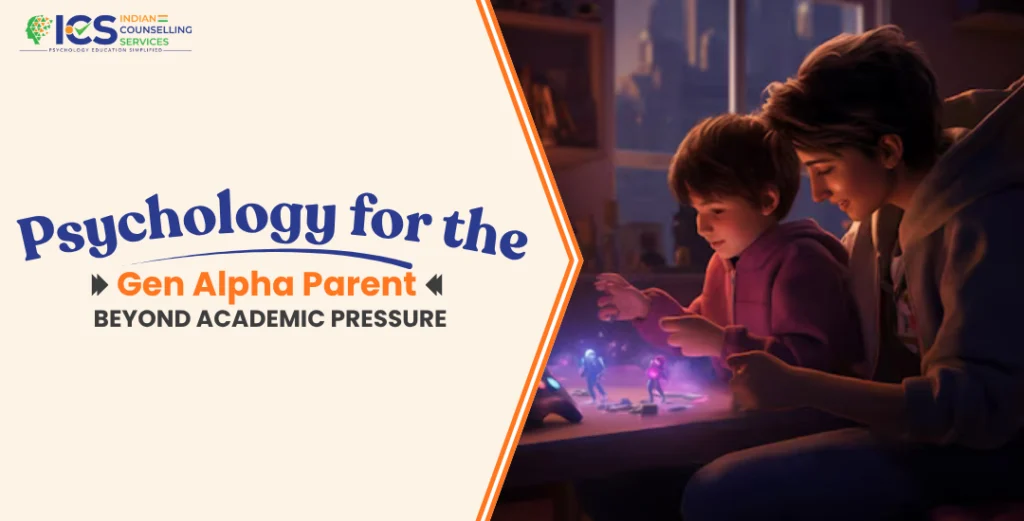
The concept of parenting in 2026 is quite different compared to just 10 years ago. When you are raising a child born post-2010, also known as Gen Alpha, you are operating in the space of a digital immersion and fast change, with new expectations.
The tendency of many parents is to place a lot of emphasis on academic achievement. Conversations often revolve around good grades, competitive exams, and future career security. However, this is the truth of the matter: academic success is not sufficient any longer to guarantee long-term success or prosperity.
The children of today require emotional intelligence, strength, flexibility, and clarity of mind as much as they require academic competencies. It is here that the human aspect is needed in psychology. It is natural that many parents nowadays decide to attend Psychology courses to learn more about the behavior, emotions, and development of their children in the modern context.
Who Is Gen Alpha, and Why They’re Different
The first generation to have grown up in a digital-first world is Gen Alpha.
- This happens because they are always in touch with each other using devices and intelligent technology at a very tender age.
- They are subjected to large quantities of information, and this influences their thinking styles and learning styles.
- They are more inclined to visual and interactive learning rather than the traditional one.
- They are extremely conscious of their environment, yet become easily overwhelmed.
Their brains are growing in a faster, noisier, and more stimulating environment than any generation before, and this necessitates a change in parenting styles.
The Problem With Over-Focusing on Academics
Academic pressures did not emerge recently, yet their degree has escalated over the last few years.
- A lot of children are anxious on a regular basis because of the constant expectations of performance.
- Children might be afraid of failure rather than develop an interest in learning.
- It is not only younger people who experience burnout.
- Children tend to attach their self-esteem to their performance in school.
In the long run, children might experience difficulties in terms of confidence and emotional well-being when the idea of success is determined solely by grades.
What Modern Child Psychology Tells Us
It has been demonstrated in child development that the way children learn is as significant as what they learn.
- Emotional security is very important in improving learning and memory.
- Play and creative activities go a long way in helping cognitive development.
- Good parent-child bonds lead to increased emotional strength.
- Allowing children to have independence also contributes to their development of confidence and problem-solving skills.
Children flourish when they experience a sense of understanding, support, and empowerment, instead of being constantly judged.
5 Psychological Priorities Every Gen Alpha Parent Should Focus On
1. Emotional Intelligence Over Just IQ
- Children should be taught to recognize and be able to express their emotions openly.
- The children should also be taught to recognize and act upon the feelings of others.
- Empathy and self-awareness should be developed as a part of life skills.
The skills are the basis of personal fulfillment and success in the future.
2. Building Resilience, Not Perfection
- Children need to be given a chance to fail and be taught how to use their failures to learn.
- The children are to be taught to take challenges as growth opportunities and not as threats.
- Perfection should not be the basis of building confidence but hard work and perseverance.
The ability to overcome difficulties in the real world is better achieved through resilience as opposed to perfect performance.
3. Healthy Relationship With Technology
- Parents should set clear and consistent boundaries around screen time and device usage.
- Children ought to use technology as a conscious experience as opposed to a passive form of content consumption.
- Activities that are offline and enhance creativity and physical exercises should be embraced.
Technology must add value to the life of a child, and not control it.
4. Encouraging Curiosity and Creativity
- Open-ended questions should be posed by parents in a way that will elicit curiosity and deeper thought.
- The children are supposed to be motivated to study the areas that they are really interested in.
- Learning must be perceived as a process and an activity that is pleasant and continuous instead of a task.
Learning based on curiosity results in higher levels of understanding and sustained interactions.
5. Strengthening Parent-Child Communication
- Parents are encouraged to provide a secure environment, and the children will express themselves.
- Children are to be given an opportunity to express their ideas without any fear of reproach or penalty.
- Regular open and honest discussions should be promoted.
Trust is a result of strong communication, and this is vital to emotional security.
The Role of Mental Health in Early Development
Mental health is no longer a problem to consider in the future; it has to be developed in early childhood.
- Childhood emotional experiences are important in determining the self-esteem of a child.
- The way the emotions are managed at home makes the children develop a set of coping mechanisms.
- Early emotional development has an influence on social relationships.
- With emotional well-being as a priority, academic engagement is enhanced.
Early mental health support provides a solid and well-established baseline in life.
Practical Daily Shifts for Parents
Minor yet regular alterations in parenting can make a difference.
- Parents should replace constant correction with curiosity and understanding.
- Praise should be given to effort and progress, and not the outcomes and results.
- Togetherness should be quality time, without the distractions of digital devices.
- In their own behavior, parents need to exemplify emotional regulation and healthy habits.
Children learn more in day-to-day interactions than from guidelines.
Navigating Academic Expectations in a Healthy Way
Academics are not to be neglected, but they must be accompanied by emotional prosperity.
- Parents ought to establish achievable and personalized goals for their child.
- It should be about progress and improvement, but not just results.
- They should not be compared with other children to safeguard self-esteem.
- Learning styles and strengths are to be considered and encouraged.
Having a balance is also useful in ensuring that children remain motivated but not overwhelmed.
Why Parents Are Turning to Psychology Education
Contemporary parenting needs a better insight into child behavior and development.
- Parents are able to understand how children think and how they process emotions better.
- They are able to learn more about behavioral patterns and triggers.
- The communication strategies can be enhanced to a great extent.
- The process of emotional and mental development can be facilitated in a more purposeful manner.
This is the reason why a lot of parents are considering Psychology courses so that they can be better informed and assured in their parenting process.
Final Thoughts
Parenting Gen Alpha is not about lowering standards; it’s about expanding them.
It is not about grades and achievements but a higher purpose: to bring up emotionally sound, mentally strong, and truly curious kids about this world.
The most valuable thing you can bestow on your child in a fast-paced world is not merely knowledge, but to learn to know yourself, and to learn to cope with life with self-confidence.
Because true success isn’t just about what children achieve…
It’s about who they become in the process.
FAQs (Frequently Asked Questions)
Is academic pressure always harmful?
Moderate expectations can motivate children, but excessive pressure can lead to stress and anxiety if not balanced properly.
How can I balance studies and emotional well-being?
You can support both by encouraging learning while also prioritizing emotional expression and mental health.
At what age should emotional development begin?
Emotional development begins in early childhood and should be nurtured consistently over time.
Can Psychology courses really help parents?
Yes, they provide practical insights into child behavior, development, and effective parenting strategies.