

I know how calm and therapeutic it feels when you wear your headphones and listen to your favourite music. It’s like a whole different world where a person experiences different emotions in every rhythm, word, and melody. Everyone listens to music, but very few know how it can be used as therapy. There have been numerous studies on how music can work as a medicine. It boosts the immune system, reduces pain and anxiety, lowers stress hormones, and improves mood.
Talking about the psychological benefits, music therapy has been found effective in reducing depression, improving sleep, improving social functioning in Schizophrenia, and movement in Parkinson’s disease. Also, with no harmful effects. But how music works in the body and helps heal patients. Let’s understand this in detail. Also, let’s find out how becoming a music therapist can bring you personal and professional benefits.
How Music Works As A Therapy?
Music therapy is a structured, evidence-based process that helps individuals heal emotionally, physically, and socially. Just like any other therapy, music therapy begins with a case assessment: getting to know the client and their preferences. It’s more than just talking. It incorporates various techniques, such as guided listening and exploring lyrics that may express one’s grief or trauma.
Then playing instruments like the drum or the piano can help improve motor skills and coordination. There are more such techniques. Overall, music stimulates the brain’s reward pathways, increases dopamine and serotonin, lowers cortisol (a stress hormone), and promotes harmony throughout the nervous system. For someone unable to express themselves verbally, music helps with non-verbal emotional expression, activates deep-seated memories, and helps one open up to feelings they can’t express in words.
Benefits of Becoming a Music Therapist
When you become a music therapist, you are not only helping your clients but also investing in your own healing journey. Let’s discuss how becoming a music therapist helps you personally and professionally:
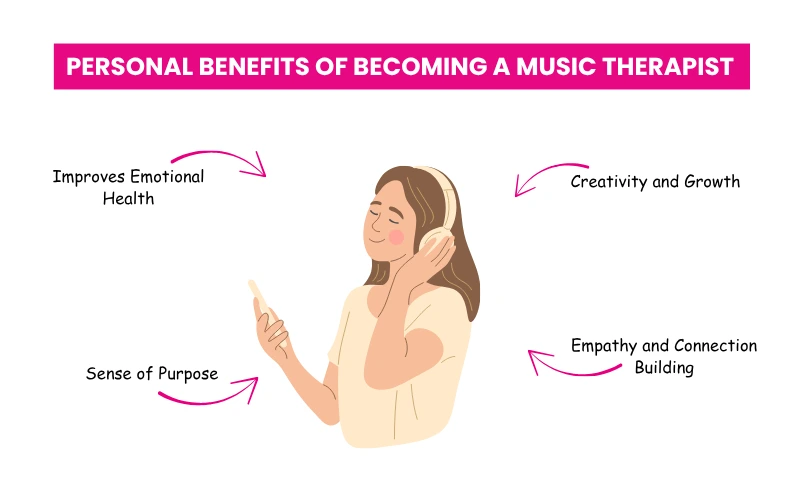
- Improves Emotional Health:Daily listening to music therapeutically is bound to enhance your emotional well-being. As a music therapist, the feelings of stress decrease while resilience increases, and the dopamine and serotonin associated with pleasure, mood, happiness, and calmness get activated.
- Creativity and Growth: As a music therapist, you are able to enhance creativity through musical interventions and the process of songwriting. This makes you grow personally and makes this journey exciting.
- Empathy and Connection Building: Working closely with clients deepens empathy and understanding of human behavior, which constitute ingredients for personal growth.
- Sense of Purpose: A sense of purpose is reached when the progress or transformation of one’s clients in music brings a lot of satisfaction and provides a sense of fulfilment or a sense of purpose.
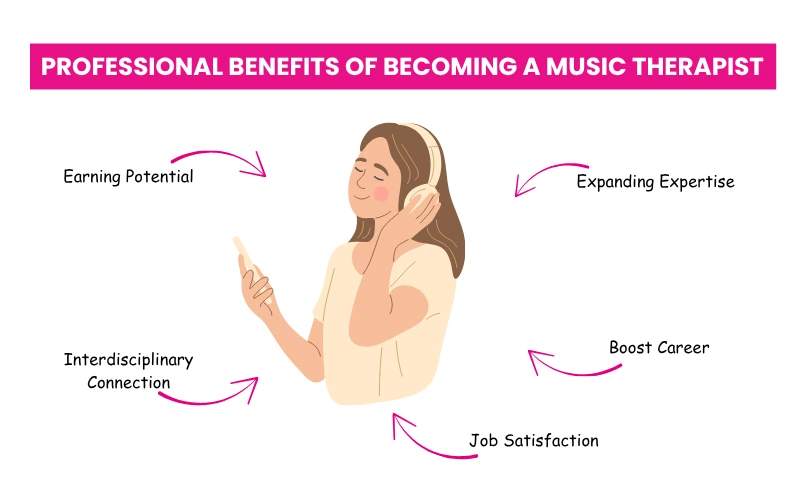
- Earning Potential: In India, at entry and mid-levels, a certified music therapist earns between Rs 3,00,000 and Rs 7,00,000 per annum. An experienced professional or one possessing advanced credentials- master’s, specialization among others, can draw a yearly remuneration ranging from Rs7 to Rs12+ annually, especially in metro cities like Delhi. The annual salary can range from Rs2.43,000 to Rs7-18,000 depending on the expertise levels.
- Expanding Expertise: The music therapy course allows counsellors, psychologists, and therapists to expand their tool set by incorporating music as an influential modality in their work.
Your skills equip you to aid clients suffering from anxiety, depression, trauma, developmental challenges, or physical rehab needs.
Certification can open a wide range of opportunities for employment in hospitals, schools, wellness centres, clinics, and private practices, plus promising career prospects in corporate wellbeing programs, special education, and telehealth.
- Boost Career: With the demand for non-pharma mental health solutions increasing, the need for certified music therapists will continue to rise. You will have a competitive edge in the job market, move on to leadership or management, and even teach, consult, or have your own practice.
- Interdisciplinary Connection: By becoming a music therapist, you can work or collaborate with other fields like students, counsellors, doctors, educators, and social workers.
- Job Satisfaction: There is abundant evidence from several research studies how music therapists enjoy their work as it is dynamic and engaging; there is also a visible progress that they observe in clients’ lives, making their role quite fulfilling and worthwhile.
Enroll For Music Therapy Course At ICS
Indian Counselling Services offers an online certificate program in music therapy. It includes the foundations of music therapy, its use in clinical settings, and learning about the therapist-client relationship in music therapy. You will also learn the scientific foundations of music therapy, methods, and techniques you can apply, and practical skills to get started.
Batches filling soon. Join fast!