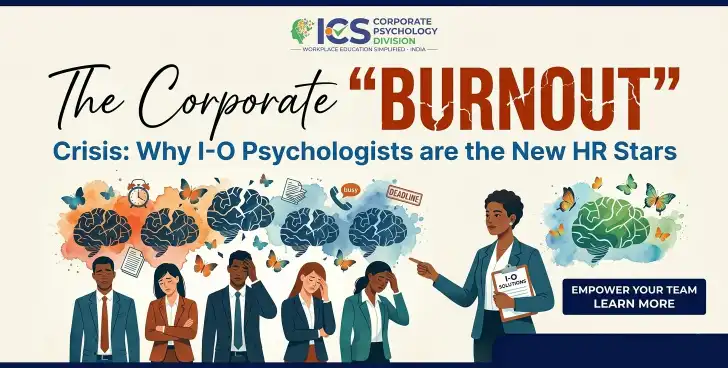
In 2026, burnout ceases to be an individual problem; it is a business crisis. In all sectors, workers are complaining of chronic stress, lack of engagement, and emotional burnout like never before. The result? Reduced productivity, increased attrition rates, and a workforce that is overworked.
Companies are starting to understand that old HR methods based largely on policies and compliance are inadequate. What is required now is scientific knowledge of human behavior in the workplace.
It is in this area that Industrial-Organizational (I-O) psychologists are coming in as the new HR stars. They are being trained in the dynamics of the workplace, motivation, and mental health, and they are transforming the way companies are tackling performance and well-being. Due to the fast-growing field, many professionals are currently resorting to an organisational psychology course in order to develop an expertise in the field.
What Is Workplace Burnout (And Why It’s Exploding)
Burnout is not simply being fatigued after a long day. It is a persistent emotional, physical, and mental fatigue due to extended stress.
It typically includes:
- Emotional burnout and weariness.
- Loss of feeling of achievement.
- Disengagement or apathy towards work.
Why Burnout Is Rising in 2026
A number of contemporary trends in the workplace are fuelling this outburst:
- The confusion of work and life is the blurring of work and personal life, characteristic of hybrid work.
- The culture of 24/7, which is fueled by digital devices and 24/7 connectivity.
- Great performance pressure, particularly in competitive industries.
- Absence of meaningful interaction where employees are out of touch with purpose.
Burnout is no longer a personal failure; it is usually an organizational system failure.
The Limits of Traditional HR Approaches
HR departments have been traditionally concerned with:
- Recruitment and onboarding
- Policy implementation
- Conflict resolution
- Compliance and administration
These are significant, but tend to be symptomatic, as opposed to being causal.
For example:
- The provision of a wellness webinar is not a panacea for chronic workload problems.
- Toxic team dynamics are not the solution to providing leave policies.
- Carrying out surveys without taking action is frustrating.
This is where I-O psychology is necessary to fill in this gap.
Who Are I-O Psychologists?
The I/O psychologists are experts who use psychology to solve work-related problems.
They focus on:
- Staff motivation and involvement.
- Leadership effectiveness.
- Organizational culture.
- Performance optimization.
- Workplace mental health.
I-O psychologists operate on the basis of data, behavioral science, and evidence-based strategies to implement change, unlike the traditional HR functions.
Why I-O Psychologists Are in High Demand
They Address Root Causes, Not Just Symptoms
I-O psychologists do not give quick fixes but rather examine the issues at a system level, like workload design, team dynamics, and leadership styles.
This will result in long-term solutions as opposed to short-term relief.
They Bring Data-Driven Decision Making
I-O psychologists base their work on:
- Behavioral assessments.
- Employee feedback analytics.
- Performance data.
This makes sure that organizational choices become evidence-based, rather than assumptions.
They Redesign Work for Well-Being
Rather than asking employees to “cope better,” they redesign systems to reduce stress and improve efficiency.
This includes:
- Optimizing workloads.
- Improving role clarity.
- Enhancing job design.
They Strengthen Leadership
One of the largest aspects of burnout is leadership.
I-O psychologists work with leaders to:
- Improve communication.
- Build emotional intelligence.
- Foster supportive environments.
Healthier teams can be directly translated into better leadership.
Key Areas Where I-O Psychologists Make an Impact
- Employee Engagement: They determine the real motivators of the employees and create plans to maximize their commitment and satisfaction.
- Performance Management: They do not use traditional assessment systems, but put systems in place that promote ongoing feedback and development.
- Organizational Culture: They contribute to the creation of the cultures of trust, inclusion, and psychological safety.
- Change Management: They help organizations to deal with resistance and uncertainty in moments of change, such as during the digital transformation or restructuring.
The Business Case: Why Companies Are Investing in I-O Psychology
Burnout is expensive.
Organizations face:
- High employee turnover.
- Reduced productivity.
- Increased absenteeism.
- Loss of institutional knowledge.
By scientifically dealing with burnout, companies can:
- Improve retention.
- Enhance performance.
- Reduce hiring costs.
- Build stronger employer brands.
Simply put, it is not only morally right to invest in I-O psychology but also a business-savvy strategy.
Skills That Make I-O Psychologists Stand Out
All the specialists in this sphere integrate several competencies:
- Thinking and interpreting data.
- Knowledge of the motivation and behavior of man.
- Communication and coaching abilities.
- Creativity in challenging situations.
These competencies enable them to be in a better position to fill the gap between performance and people.
How to Build a Career in I-O Psychology
With the heightened demands, there has been increased interest among more people in the field as a career.
A course in organisational psychology can assist you to:
- Know how to behave and interact in the workplace.
- Acquire evidence-based intervention strategies.
- Gain practical skills for real-world applications.
- Training to work in HR, consulting, or leadership development.
This renders it a perfect option for anyone with an interest in psychology as well as business.
The Future of Work: Human-Centered Organizations
The workplace of the future is not just about efficiency; it’s about human sustainability.
Organizations are moving towards:
- Flexible work environments.
- Mental health integration.
- Purpose-driven cultures.
- Employee-centric leadership.
I-O psychologists have led in this revolution, and thus businesses have been expanded without undermining well-being.
Final Thoughts
Burnout does not mean that employees are weak- it means that systems need to change.
I-O psychologists are becoming invaluable as organizations are under pressure to achieve as well as take care of their employees. They can come with the tools, insights, and strategies necessary to make workplaces not only productive, but also sustainable and human-centered.
In the future, 2026 and beyond, technology or strategy will not be the sole source of competitive advantage; it will be people. And that is what I-O psychology is all about.
FAQs (Frequently Asked Questions)
What does an I-O psychologist do?
They use psychological theories to enhance workplace performance, culture, and the well-being of employees.
Is I-O psychology different from HR?
Yes. Whereas the HR is process and policy oriented, I-O psychology is behavioral, data, and system oriented toward improvement.
Can an organisational psychology course help me enter this field?
Yes. It offers some fundamental skills and practical skills necessary to work in HR, consulting, or organizational development.
Why is burnout considered a corporate issue?
Due to the fact that it is commonly systemic, and is usually caused by workload, culture, and leadership, and not by individual stress.