

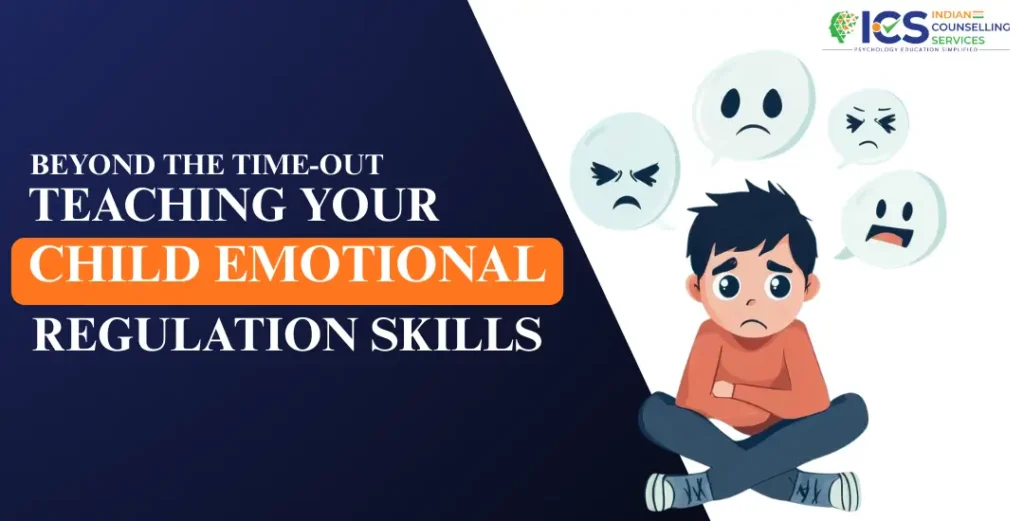
Time-outs are also a usual method of discipline in parenting and education over the decades. Although they may be able to halt the undesirable behavior in the short term, they seldom attempt to address the emotional aspects of the behavior. Children do not misbehave due to the lack of rules; children do not struggle due to the lack of skills in emotional regulation. Emotional regulation teaches children to understand their feelings, the reason why they are feeling, and how they can react safely and appropriately. These philosophies are central in development models, which are learned via a diploma in child psychology relating to long-term emotional development as opposed to short-term conformity.
Why Time-Outs Alone Are Not Enough
Time-outs tend to establish distance between a child and inappropriate behavior; however, they may also work against their intention, which is to isolate a child in a state of emotional overwhelm.
In case the child is distressed, being disconnected can enhance rejection or feelings of embarrassment. Instead of learning to control his/her self, the child can learn to repress his/her emotions or fear to express them. This may result in being stressed inwardly instead of being emotionally developed.
- Emotion-oriented theories focus upon the perception of behavior as communication.
- Rather than saying, How do I get rid of this behavior?
- It is suggested to the caregivers to question, What is this behavior attempting to say?
What Is Emotional Regulation in Children?
Emotional regulation refers to the capacity to become aware of emotions, to endure distress, and to act in a socially acceptable manner.
This ability is not developed in children at birth. The process of emotional regulation develops over time as the brain matures, especially in those regions that deal with impulse control and emotional processing. Young children are dependent upon adults to help them go through their emotional lives.
Developmental models provided in a diploma in child psychology emphasize having learned emotional regulation by repeated relational experiences rather than discipline itself.
Signs a Child Is Struggling With Emotional Regulation
Emotional dysregulation is usually in the form of difficult behavior, particularly in young children who have no verbal skills.
- Relapse of emotional tantrums can mean that a child is experiencing overloaded emotions and has no coping mechanisms to deal with strong emotions.
- Lack of ability to calm down even after minor frustrations may be an indication of poorly developed emotional control abilities and not deliberate defiance.
- Emotional overload or unmet attachment needs may be evidenced in avoidance, withdrawal, or aggressive behavior.
- Emotional stress may be accompanied by physical complaints of stomachaches, headaches, or fatigue among children.
The awareness of these patterns enables the caregivers to react in an empathetic and supportive manner, rather than in a punitive manner.
The Role of Co-Regulation Before Self-Regulation
Children cannot regulate themselves, and before they are able to do this, they must be regulated by others.
Co-regulation is a procedure where the adult is responsive, emotionally calm, and present when the child is suffering. This will stabilize the nervous system of the kid and will train them in a sense of calm.
Children learn these experiences through repeated co-regulation and eventually become able to regulate themselves independently. This is the basic concept in child development education, such as training provided using a diploma in child psychology.
Practical Ways to Teach Emotional Regulation Skills
Emotional control is a continual process that is found in everyday life.
- Labeling emotions will assist the children in recognizing what they feel and reduce confusion in emotional situations.
- Verifying the emotions educates the children that their feelings are fine, even when some behaviors require control or correction.
- The demonstration of cool reactions teaches the children how they can cope with frustration, disappointment, or anger because it is demonstrated.
- Routine emotional safety and minimization of anxiety-driven behavior are achieved through maintaining predictable routines.
Such practices are best when done regularly as opposed to when there is a crisis.
Using Calm-Down Tools Instead of Punishment
Calm-down aids help children have a positive substitute for emotional breakdown.
- Breathing exercises can assist the children to slow down their heart rate and behave in control during emotional flooding.
- Examples of sensory tools, like stress balls and weighted objects or movement activities, are used to help in the regulation of the nervous system.
- Quiet connection time enables children to feel nurtured and at ease as they relax instead of being lonely.
These tools instruct children on how to control and not just hope that regulation will take place.
Teaching Problem-Solving After Emotional Calm
When a child is emotionally stable, then learning can take place.
Once the emotional wave has subsided, the caregivers are able to inquire in a subtle way what transpired, how the child felt, and what can be done differently in the future. This discussion must be cooperative and not corrective.
Constructive problem-solving when calm creates a sense of accountability, not shame, and facilitates emotional learning, which is not short-lived.
Age-Appropriate Expectations Matter
The emotional capabilities of children greatly depend on their developmental stage and age.
Asking a preschooler to soothe themselves as an adult or control themselves in the way an older child does places undue and unrealistic expectations on them. The ability to regulate emotions is not acquired at a steady pace.
Courses like a diploma in child psychology focus on developmentally necessary anticipations, assisting individuals in care to modify reaction according to the neurological maturity and not just conduct.
The Impact of Emotional Language at Home
The terminology that is used by adults with regard to emotions will influence the way children perceive themselves.
The ability to support language in an emotional way makes children feel noticed and heard, whereas dismissive language might lead to the child being taught to disregard or otherwise silence feelings. All that it takes is a few changes in phrasing to produce dramatic changes in emotional results.
In the long run, emotionally sensitive communication increases the level of trust and emotional safety in the parent-child interaction.
How Emotional Regulation Supports Long-Term Well-Being
Those children who learn to control their emotions at an early age are also in a better position to cope with life.
They are less likely to display negative social behaviours, less likely to exhibit poor academic involvement, and have poor coping mechanisms. Emotional regulation also minimizes the chances of anxiety, behavioral problems, and emotional burnout in the future.
Teaching emotional regulation is not about controlling behavior; it is about nurturing resilience, self-awareness, and emotional intelligence.
Final Thoughts
Leaving time-outs will enable caregivers to deal with the emotional cause of the behavior and not just compliance. One of the essential life skills that is built by means of being connected, guided, and practicing is emotional regulation. Through focusing on co-regulation, emotional validation, and age-related expectations, the caregivers contribute to the ability of the children to develop long-term emotional resilience. Through these principles, the foundations of contemporary child development education, including a diploma course in child psychology, highlight the evidence-based and compassionate methods of raising emotionally sound children.
FAQs (Frequently Asked Questions)
What is emotional regulation in children?
Emotional regulation can be described as the capacity of a child to interpret, cope, and react to emotions in healthy and age-related ways.
Are time-outs harmful for children?
Time-outs are not inherently harmful, but they are less effective when used without emotional guidance or connection.
At what age can children learn emotional regulation?
Children begin learning emotional regulation in infancy through co-regulation, with skills developing gradually over time.
How can parents help children calm down during emotional outbursts?
Parents can help by staying calm, validating feelings, and offering age-appropriate calming strategies.
Do child psychology programs teach emotional regulation strategies?
Yes, emotional regulation and developmentally informed approaches are core components of a diploma in child psychology.