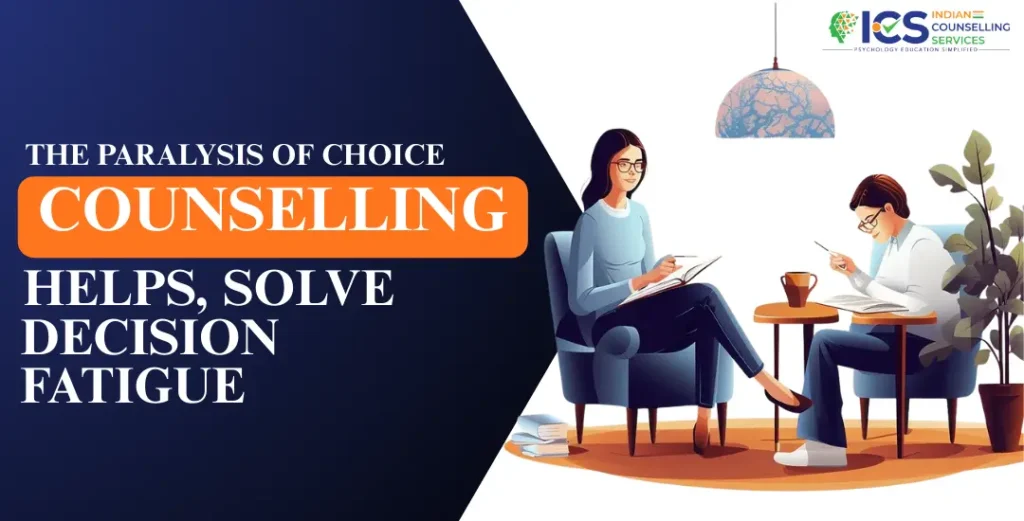
In the world of unlimited choices, the decision-making process has turned out to be mentally draining instead of being empowering. The ever-present need to make choices, whether it comes to career and even micro-decisions, may cause decision fatigue and emotional shutdown.
This phenomenon, which is commonly referred to as the paralysis of choice, is raising more and more questions in therapeutic settings. Decision fatigue and cognitive overload.
Concepts associated with decision fatigue and cognitive overload are often the subjects of professional training, including counseling courses, in which counselors are taught to promote clarity, regulation, and confident decision-making.
What Is the Paralysis of Choice?
The paralysis of choice happens when a person cannot dictate anything as a result of having too many choices or the brain overworking him/her.
More options are likely to result in more anxiety, self-doubt, and fear of failing to make the right decision rather than better results. This may lead to avoidance, procrastination, or external validation as opposed to individual values.
Understanding Decision Fatigue
Decision fatigue is the gradual loss of mental energy that follows repeated decision-making.
When cognitive resources are depleted, individuals can lose control of their impulses, become emotionally reactive, or not decide at all. That is why what might appear to be simple decisions can overwhelm later in the day.
Decision fatigue is not a failure to be disciplined and motivated. It is a natural brain reaction to long-term cerebral need.
Why Modern Life Intensifies Decision Fatigue
Modern lives increase decision fatigue through stimulation and comparison.
- Online platforms present people with unlimited options, views, and standards of performance that make it difficult to make simple choices.
- Fear of regretting and self-indictment is heightened due to cultural pressure to ensure all decisions are optimal.
- Work situations tend to require high-pressure, high-stakes, and little recovery decisions.
- Identity has become more closely associated with personal decisions, and it makes it emotionally threatening to make a mistake.
All these elements make the decision-making process emotional and not practical.
Emotional and Psychological Effects of Decision Fatigue
In cases where decision fatigue is present, it may cause an impact on emotional well-being and functioning.
- Individuals may experience heightened anxiety and rumination around even low-risk choices.
- Unstable indecision may translate into incompetence or loss of confidence in oneself.
- Emotional exhaustion may result in avoidance behaviors or impulsive decision-making.
- Decision fatigue may lead to burnout, depression, or a strained relationship in the long term.
Self-awareness of these effects is essential to the difficulties of focusing on the causes, but not the effects of behavior.
How Counselling Addresses Decision Fatigue
Counselling is a judgement-free, stress-free space to explore decision-related stress.
Instead of dictating to the clients what to decide on, counselors assist people in their decision-making processes by helping them understand how they make their choices and what distracts them. This procedure reinstates agency and trust in the long-run.
The relevant professional counseling skills are part of the fundamental elements of the professional counseling courses, where trainees get to learn how to offer cognitive and emotional balance.
Clarifying Values and Priorities
Realigning personal values is one of the initial actions towards overcoming decision fatigue.
- Counselling will guide an individual to what is really important to him and not necessarily the expectations.
- Priorities define what needs to be done, and as such, the number of choices that require emotional energy is minimized.
- The values-based decision-making process is based on the shift toward alignment instead of perfection.
Values put a person in control when it comes to making decisions that are less and more necessary.
Managing Anxiety and Fear of Regret
The dread of bad choice is one of the biggest causes of decision paralysis.
- Counsellors make individuals notice catastrophic thinking patterns that are associated with regret and failure.
- Emotional regulation techniques are also resorted to to lessen anxiety before making the decision.
- Clients also get to understand how to put up with uncertainty instead of avoiding it completely.
This process supports healthier emotional responses to imperfect outcomes.
Reducing Cognitive Overload Through Structure
Counselling brings in viable measures to improve mental clutter.
- The process is less demanding when decisions are divided into smaller steps that are easy to handle.
- The establishment of time expectations of decision-making avoids rumination.
- Understanding that an adequate decision has been made is enough to rejuvenate.
These would be used particularly by people who are more likely to overthink or be perfectionists.
Rebuilding Self-Trust and Confidence
Trust in judgment is usually destroyed by decision fatigue.
- Counselling helps people to look into the past and make judgments on what they have done, but without being judgmental.
- Clients are taught to distinguish between results and self-esteem.
- Sequential exposure to decision gives confidence based on experience and lived exposure.
Restoring trust in oneself is one of the major objectives of counseling classes and clinical education.
Who Benefits Most From Counselling for Decision Fatigue?
Decision fatigue counseling is useful to a large group of people.
This encompasses professionals experiencing burnout, career paralysis in students, neurodiverse people with cognitive overload, and those who can not decide on anything in the long term.
The support is especially beneficial once the decision paralysis starts to disrupt the daily functioning or emotional state.
Final Thoughts
The cause of paralysis of choice is not one individual failure but an expected reaction to the overload of cognition and emotion. Counselling provides practical and caring methods to minimize decision fatigue through anxiety, values, and self-confidence. By instructing people in clearly and emotionally regulating their thought patterns, one will be able to reevaluate their decisions and feel confident about them. Decision fatigue is on the rise, and education in this field continues to be a primary concern in contemporary counseling programs, enabling experts to help people make healthier choices in the overstimulated society.
FAQs (Frequently Asked Questions)
What is decision fatigue?
Decision fatigue is mental exhaustion caused by repeated decision-making, leading to reduced clarity and self-control.
Is decision paralysis linked to anxiety?
Yes, anxiety often intensifies fear of making the wrong choice, contributing to avoidance and indecision.
Can counselling really help with indecisiveness?
Yes, counselling helps individuals understand emotional blocks, reduce anxiety, and develop decision-making strategies.
How long does it take to see improvement?
Improvement varies, but many individuals notice reduced overwhelm once emotional regulation and structure are introduced.
Do counselling programs teach decision fatigue management?
Yes, modern counseling courses include training on cognitive overload, emotional regulation, and decision-making support.