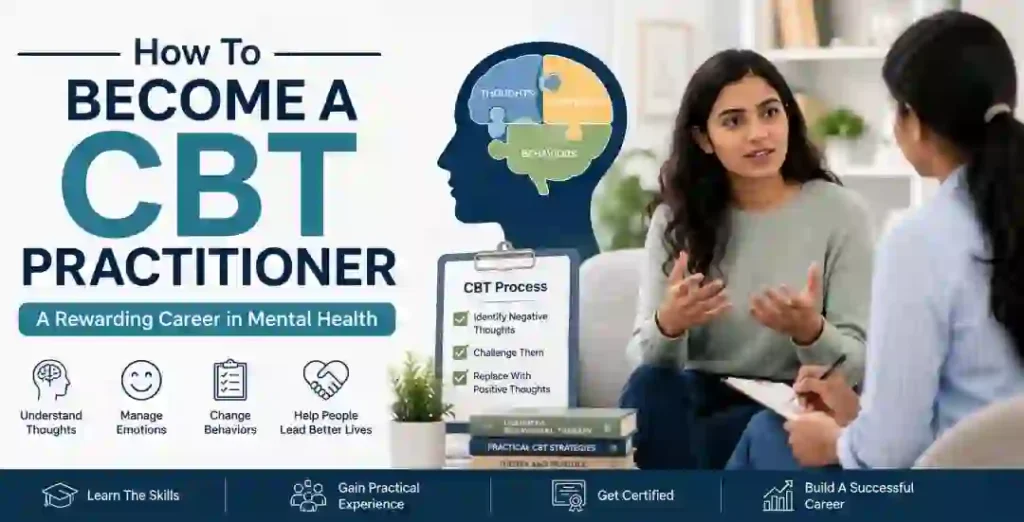
The awareness about mental health in India is on the rise. There is an increased demand for professional intervention for issues such as stress, anxiety, negative thinking, relationship problems, and emotional problems. As a result, there are more and more people who are required to be trained CBT therapists. A meaningful and rewarding career choice that can be pursued if interested in psychology, counselling and mental health careers is to be a CBT practitioner. This guide will help you understand what CBT is, what qualifications you need to become a CBT practitioner, career prospects, and the step-by-step process to become a CBT practitioner in India.
What is Cognitive Behavioural Therapy (CBT)?
Cognitive behavioural therapy (CBT) is a structured psychological intervention, which is often referred to as CBT, that centres on the role of thinking in the development of emotions and behaviour. It assists people recognize unhealthy thinking and swap it with more healthy and sensible responses.
CBT is a common treatment used for:
- Anxiety disorders
- Stress management
- Depression
- Panic attacks
- Low self-confidence
- Anger issues
- Relationship problems
- Workplace stress
CBT is now regarded as one of the most effective evidence-based therapy approaches practiced globally.
Motivation to pursue a career as a CBT Practitioner
The mental health field in India is growing rapidly. There is a growing demand for skilled individuals to help with emotional health, whether in schools, hospitals, non governmental organizations (NGOs), rehabilitation centres, corporate bodies or private clinics.
There are a few benefits to be gained from becoming a CBT practitioner:
High Demand In Mental Health Industry.
In the past few years, a greater awareness of emotional health and psychological well-being has led to a greater demand for counsellors and therapy professionals.
Flexible Career Opportunities
- Private practice
- Counselling centres
- Schools and colleges
- Hospitals and clinics
- Online therapy platforms
- Corporate wellness programs
- Opportunity To Help Others
CBT therapists help people deal with emotional challenges and enhance their functioning in their daily lives. They can make a difference in others’ lives in this career.
A Culture That Fosters Ongoing Learning and Improvement.
Psychology is continually developing. The workshops, practical training, certifications and supervision are a regular part of the life of CBT practitioners to keep their knowledge current.
To become a CBT Practitioner In India, a person must hold a degree in psychology.A CBT Practitioner In India should have a degree in psychology.
A question that is frequently asked by many students is, do they need to have a background in psychology before they begin to learn CBT? A psychology degree can be useful, but there are several options that can be followed based on the career goals.
In general, students who prefer CBT trainings are from the following background:
- Psychology students
- Counsellors
- Therapists
- Social workers
- Teachers
- Mental health professionals
- Life coaches
Advanced qualifications in psychology are strongly recommended for the professional practice of psychology.
Step By Step Training To Become A CBT Practitioner
Step 1: Create the foundation in psychology.
Firstly, an understanding of human behaviour, emotions, and mental processes need to be developed. Most experts start with:
- A bachelor’s degree in Psychology.
- Counselling courses
- Diploma mental health programs
- Social work education
A solid academic foundation enables students to grasp therapeutic concepts better.
Step 2: Sign up for an A CBT Training Program
Once you’re done with your basic education, you’ll be ready to register for a specialized CBT course. In a good CBT course, it should be possible to cover:
- CBT theories and models
Case studies - Practical counselling techniques
- Role play and activities
- Supervised learning
- Client handling methods
Practical is very crucial as therapy skills are enhanced by application.
Step 3: Hands-on Experience
Confidence and communication skills are developed through practical experience. Exposure comes through many learners’ eyes, such as:
- Internships
- Supervised practice
- Volunteer work
- Mental health organizations
- Counselling centres
Practical training enhances awareness of therapeutic practice and client issues.
Step 4: Work on developing the basic counselling skills is completed
It is not enough for a CBT practitioner to have a theoretical understanding. The following are important professional skills:
- Active listening
- Empathy
- Communication skills
- Problem-solving ability
- Emotional intelligence
- Ethical practice
- Rapport building
These skills support development of trust and therapeutic relationships.
Step 5: Continue Professional Development
Psychology is an ever-evolving discipline. CBT practitioners may attend:
- Workshops
- Webinars
- Certification programs
- Mental health conferences
- Advanced therapy training
Continuous education enhances occupational development and advancement.
What Jobs Can You Get After CBT Training?
Once they receive CBT training, they have the opportunity to pursue various career opportunities depending on their skills and interests.
Popular career options include:
- CBT Practitioner
- Counsellor
- Mental Health Educator
- School Counsellor
- Wellness Coach
- Psychology Trainer
- Rehabilitation Support
- Professional
Other professionals also opt to work as a self-employed counsellor or offer online counselling services.
There are several things to consider before enrolling in a CBT Course. Several factors are important when considering taking a CBT Course.
Students are encouraged to consider and research the following before entering any program:
- Course curriculum
- Practical training opportunities
- Faculty experience
- Internship support
- Student reviews
- Certification credibility
- Supervision availability
There is also a number of online debates that stress the importance of checking to see if the training meets the professional standards and expectations of supervised practice.
Is the CBT a good career in India 2026?
Of course, CBT is one of the fastest-growing areas of mental health and counselling. There is a growing appreciation of emotional health, stress in the workplace, issues with relationships, and mental health among students that has led to an increased demand for trained professionals.
With rising awareness, CBT practitioners are likely to be seen in hospitals, schools, rehabilitation centers, corporate wellness programs, and other areas across India.
Final Thoughts
The path to CBT practitioner in India is a blend of education, training, and emotional awareness. As mental health services become increasingly significant, there are valuable career prospects for students and professionals in the psychology and counselling field.
With the right training, experience and ongoing development, you can create a meaningful career in CBT and improve lives.